
This post contains affiliate links.
This post will explore the key differences between kidney beans and pinto beans, including their taste, nutritional profiles, culinary uses, and more, helping you decide which one best suits your needs.

Jump to:
Overview
Kidney Beans
Kidney beans originated 7000 years ago in Central and South America and were often paired with corn and squash. They were introduced to the rest of the world in the 15th century and quickly became a staple in global cuisines due to their adaptability, nutritional value, and ease of storage. Today, kidney beans are an essential ingredient in various dishes, from Indian rajma to the classic American chili.
Kidney beans get their name from their shape, which closely resembles a human kidney.
Pinto Beans
Pinto beans also originated in the Americas and are still heavily used in Southwestern American and Latin American cuisine today. They are often used in tacos and burritos, chili and smashed up to make refried beans.
"Pinto" comes from the Spanish word for "painted." Pinto beans have a mottled or speckled pattern on their skin, resembling painted brushstrokes.
Now that we know more about each ingredient, let's compare them!
Appearance

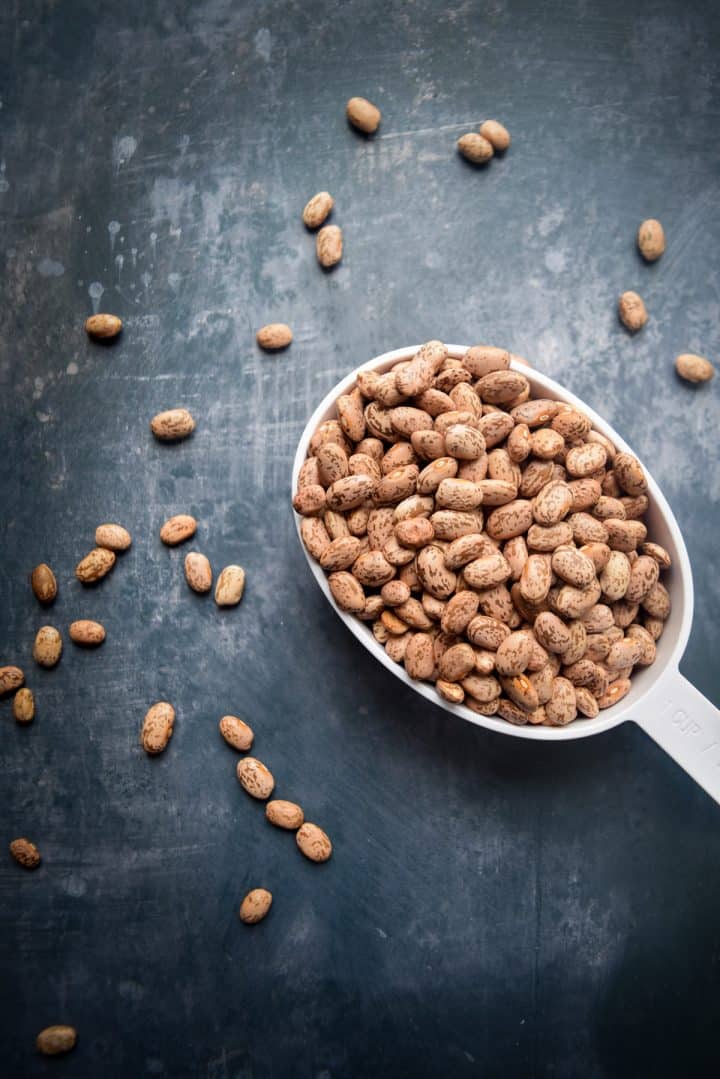
- Pinto beans are beige with reddish-brown speckles, giving them a mottled, marbled look when dry. Once cooked, they turn a uniform light brown and have a creamy texture.
- Kidney beans, on the other hand, are larger and shaped like a kidney, with a smooth, glossy surface. They come in deep red or lighter reddish-pink shades, maintaining their vibrant color even after cooking.
Taste
- Pinto Beans: Pinto beans have a mild, earthy flavor with a creamy and slightly nutty undertone. When cooked, they develop a soft, rich texture that blends well into dishes, making them a favorite for refried beans and creamy soups.
- Kidney Beans: Kidney beans have a firmer texture and a more robust, slightly sweet, and nutty flavor. Their hearty taste holds up well in dishes with bold spices, such as chili and stews.
Nutrition
Kidney beans and pinto beans are nutrient-rich but differ slightly in their nutritional profiles. Here's how they compare per 1-cup serving (cooked, unsalted):
Calories and Macronutrients
- Kidney Beans: Around 225 calories, 15g of protein, 40g of carbohydrates, and 0.9g of fat.
- Pinto Beans: Slightly higher at about 245 calories, with 15g of protein, 45g of carbohydrates, and 1.1g of fat.
- Key Difference: Pinto beans provide slightly more calories and carbohydrates, making them a better choice for energy-dense meals.
Fiber
- Both beans are high in dietary fiber, with kidney beans offering approximately 11g and pinto beans providing around 15g per cup.
- Key Difference: Pinto beans have a slight edge in fiber, promoting better digestion and heart health.
Micronutrients
- Kidney Beans: Higher in iron and potassium, essential for energy production and blood pressure regulation.
- Pinto Beans: Provide more folate and magnesium, supporting cell function and bone health.
- Key Difference: Kidney beans are better for iron and potassium needs, while pinto beans excel in folate and magnesium content.
Glycemic Index
- Both beans have a low glycemic index, making them suitable for managing blood sugar levels. However, pinto beans are often considered slightly better for blood sugar control.
Summary: Kidney beans are great for those needing more iron and potassium, while pinto beans offer more calories, fiber, and folate. Both are excellent choices for a balanced, healthy diet.
Preparation and Cooking Time

In the United States, canned pinto and kidney beans are easily available at the grocery store. However, you can also purchase dried beans and cook them yourself.
Dried beans are really easy to cook. You'll just need to give them water, heat, and time. Here are some links to popular cooking methods for kidney and pinto beans and how long each takes.
As you can see, kidney beans cook a little quicker than pinto beans.
Pinto beans
- Instant Pot/pressure cooker: unsoaked-50 minutes, soaked-15 minutes
- Stove Top: 2 hours, 30 minutes
- Slow Cooker: 8 hours
Kidney Beans
- Instant Pot/Pressure Cooker: unsoaked-45 minutes
- Stove Top: 1 hour, 30 mins
- Slow Cooker: 4 hours on high, 6 hours on low
If you'd like to learn more about using dried beans instead of canned. Check out my post, "Canned Beans vs Dried Beans: Which is Better?"
Cost
If purchasing dried beans, kidney beans are more expensive than pinto beans. As of December 2024, I can buy 1 pound of dried pinto beans for $1.00 at Walmart, while 1 pound of dried kidney beans is $1.98.
Both types of canned beans, however, cost the same: 86 cents.
Recipes
Both of these beans are often used in Mexican cuisine, traditional dishes from South and Central America, and dishes from other parts of the world. Here are some of my favorite recipes for each type of bean.
Pinto Bean Recipes

Spiced Pinto Bean Salad with Avocado Dressing
Kidney Bean Recipes

Authentic Louisiana Red Beans and Rice
Frequently Asked Questions
Both types of beans are very nutritious and should be consumed as part of a well-balanced diet. While they are nutritionally similar in many ways, kidney beans have more iron and potassium, while pinto beans offer more calories, fiber, and folate.
Pinto beans and kidney beans make good substitutes in most cases. The main thing to consider is that they have different textures. Pinto beans are creamy, while kidney beans are firm.
If the recipe specifically highlights the texture of kidney beans (e.g., certain salads or chunky stews), the softer pinto beans may provide a different result. Kidney beans may achieve a different smooth consistency than pinto beans in recipes like refried beans or creamy bean dips.
Conclusion
I hope this guide has been helpful to you! Is there anything else you've been wondering about the two types of beans? Let me know in the comments, and let me know which kind of bean you prefer! I cook with pinto beans a lot more than kidney beans. If you have a good kidney bean recipe, please share it!
✌️Ems


Comments
No Comments